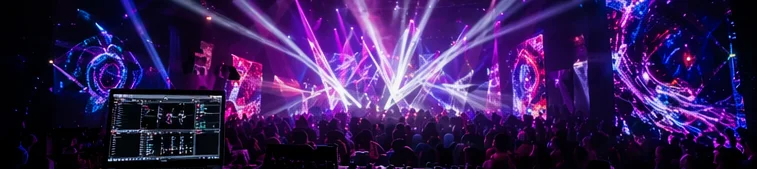
Four rights layers in parallel
A single piece of content VJing touches carries (1) the underlying song copyright (composition, lyric), (2) the master recording right held by the label, (3) video rights (music videos, stock footage, your own production), and (4) lyric display rights (rooted in the lyricist's copyright and managed separately in many jurisdictions).
In Japan the most visible layer is (1), and it is typically handled through a JASRAC or NexTone blanket license for venues. The commonly overlooked one is (2): master rights are not included in those blanket deals. In principle, playing a commercial CD or digital track verbatim in a venue still needs separate clearance from the label — a grey area in day-to-day practice, but one worth being aware of.
Four Japan-facing points to remember
- JASRAC blanket licensing (live houses and clubs)
- A trust-based license, priced by capacity or floor area — monthly or yearly. Most Japanese live houses and clubs clear the "performing right" for compositions this way.
- NexTone — performing rights from April 2022
- NexTone historically focused on recording and streaming. Since April 2022 it has also started collecting some performing rights. Rates are set higher than JASRAC because this layer is harder to manage.
- Master rights live elsewhere
- JASRAC and NexTone do not manage master rights (the label's right in the recording). Strictly speaking, playing a commercial CD / digital track in a venue requires separate clearance from the label. A well-known grey area in practice.
- YouTube embed terms
- YouTube's terms of service assume personal viewing; public venue display is a separate call. Combined with commercial use or monetization, extra care is warranted. Uploading DJ mixes to YouTube triggers Content ID detection — with claim, monetization, or block as possible outcomes.
Lyrics and stock visuals
- LRCLIB (lyrics database)
- Free, no API key, no rate limits. Community-maintained. "Built especially for FOSS music players." Best practice is to send a User-Agent header (app name / version / URL). Note that the underlying lyric copyright belongs to the lyricist; LRCLIB has not pre-cleared every entry on your behalf. Attribution is recommended for commercial use.
- Creative Commons stock footage
- Beeple's decade of VJ loops, Pixabay Video, Mixkit, and similar sources each operate under their own license — commercial use, credit requirements, and other terms vary per item. The set is not uniformly CC0; check each asset.
- Reselling-prohibited clauses in stock libraries
- Licenses like Mixkit's or Envato Elements' permit commercial use inside your work, but prohibit reselling or redistributing the raw assets or building competing libraries. An industry-standard clause — relevant if you distribute your VJ sets as downloadable content.
Pragmatic operating rules
"Keep the default minimal" is the realistic operating stance. Background visuals plus a small overlay as the default, with lyric and music-video layers only enabled on specific nights, keeps rights exposure manageable.
Browser-based automated VJ tools like autovj.club inherit the video layer's rights posture from YouTube embed terms, while the music-performing rights are covered by the venue's blanket license. Thinking in two layers — "who owns which right?" — usually clarifies the full picture.